


Brand : ICM
Catalogue number : 48355
Theme : Military WW2
Type : Aircraft
NEW 2026 RELEASE
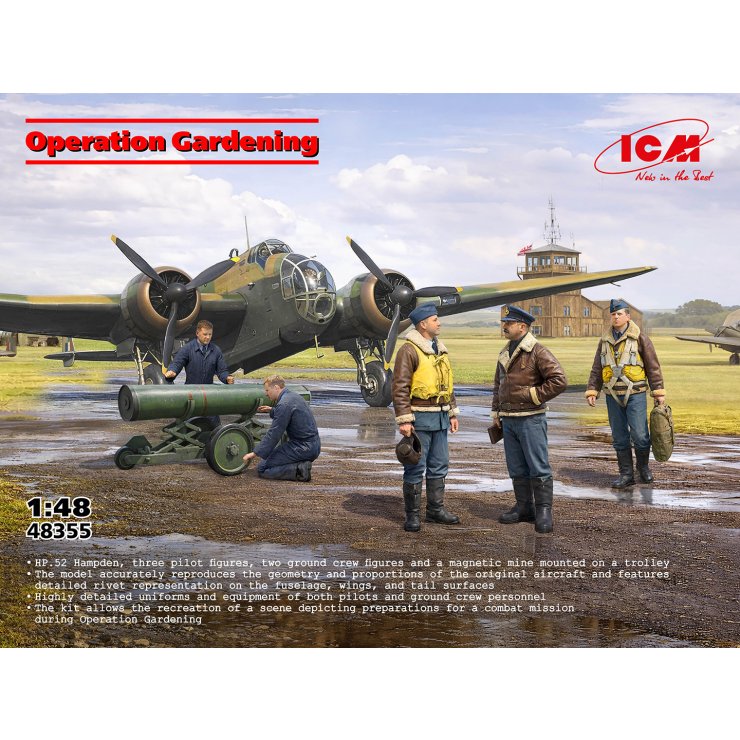
Operation Gardening
Unpainted kit set
The prototype of the Handley Page HP.52 Hampden bomber first flew on June 21, 1936, and it entered service with the RAF in September 1938. The design of the HP.52 Hampden was unusual for its time: the aircraft featured an extremely narrow fuselage only 90 centimeters wide, which provided excellent aerodynamics but resulted in very cramped conditions for its four-man crew. Due to its distinctive shape, it earned the nickname “Flying Suitcase.”
In the early stages of the Second World War, it was used for daytime missions; however, its limited defensive armament made it an easy target for German fighters. As a result, from December 1939 it was gradually reassigned to night operations. A notable chapter in its combat history was its role in Operation Gardening, the code name for a campaign involving the laying of magnetic mines in enemy waters, mainly in bays and near harbors. In the winter of 1939–1940, several Hampdens were specially modified to carry mines in their bomb bays, and the first mines were laid on the night of April 14, 1940, off the coast of Norway.
The aim of the operation was to mine German coastal waters, estuaries, and harbors that were inaccessible to British naval forces. Operation Gardening proved highly effective — by the end of 1940, HP.52 Hampdens had laid 703 mines. Loss rates during mining missions were significantly lower than during bombing raids against industrial targets in Germany. The Hampden performed mine-laying duties until 1942, when it was replaced in this role by heavier four-engine RAF bombers.
On Watchlists: 0
The price of new stock may vary depending on the exchange rates, freight, and change in manufacturer's price.